
Even as the slowdown in the information technology (IT) services sector deepens, banking, financial services and insurance (BFSI), as well as oil and gas companies, emerge as the primary drivers of corporate earnings in the country. The IT services sector's share in corporate earnings declined to a five-year low of 17.4 per cent in the second quarter (Q2) of 2023-24 (FY24), whereas banks and finance companies accounted for 46.5 per cent, and oil and gas firms contributed 16.8 per cent. At their peak, IT services firms like Tata Consultancy Services (TCS), Infosys, HCLTech, and Wipro represented just over a third of the combined net profit of all listed companies in the Business Standard sample.

A slowdown in the automobile industry is set to reverse by the year-end. The slowdown, which is cyclical in nature and occurs after every seven years, should come to an end in the next three months, according to the Society of Indian Automobile Manufacturers (SIAM), the country's apex automobile body.

'We are confident that over the next few years the government will strike a fine balance between populist measures and growth, and manage coalition partners well.'

'Those betting against PSUs will likely be punished in this upswing.'
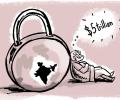
India decisively withstood global headwinds in 2023 and is likely to remain as the world's fastest-growing major economy on the back of growing demand, moderate inflation, stable interest rate regime and robust foreign exchange reserves. Despite widespread pessimism witnessed among the developed nations and the worsening geopolitical situation, India recorded a gross domestic product (GDP) expansion of 6.1 per cent in the March quarter. The growth moved up to 7.8 per cent in the June quarter and was 7.6 per cent in the September quarter. For the first six months of this fiscal, the growth was 7.7 per cent.

Good results for the January-March quarter (Q4) of FY24 and strong seasonal demand have led to strong investor interest in Crompton Greaves (CG) Consumer Electricals which is hitting new highs. While there's bullish consensus on the company's future performance, the stock has gained over 40 per cent in the last six months and valuations may become stretched. The Q4FY24 revenue rose 9.5 per cent YoY to Rs 1,960 crore.

'Investors should focus on largecap funds, flexicap funds, business cycle funds, or hybrid-category funds.'

The S&P BSE Sensex ended down 418 points at 24,062.

Earnings growth trajectory for India's capital goods firms is likely to stay buoyant for the December 2023-ended quarter (Q3 FY24), said analysts. Guidance on margins, ordering activity in an election year and export-related demand would be key monitorables. Brokerages - Motilal Oswal, Nuvama, Kotak Institutional Equities and Prabhudas Lilladher - estimated revenue growth for their capital goods universe to be 11-16 per cent year-on-year (Y-o-Y).
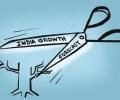
The biggest risk to India's growth outlook is an escalation of geopolitical tensions, especially if these tensions spread to the Asian region, RBI Monetary Policy Committee (MPC) member Jayanth R Varma said on Wednesday. Varma, in an interview to PTI, said that inflation and inflationary expectations appear to be moderating and high inflation will certainly not become the 'norm' in the country. He is cautiously optimistic about the Indian economy as after the pandemic abated, consumption demand has begun to recover though the recovery is uneven across sectors and industries.

While several key economic legislations, including insurance and PFRDA bills, are pending in Parliament, the government had to recently put on hold its decision to open the multi-brand retail sector to foreign investors.

The companies' combined net profit declined by 10.1 per cent y-o-y during June '19 quarter against 26.2 per cent y-o-y growth a year ago.

The FMCG sector is generally considered to be a safe haven during difficult times as people never stop buying soap and toothpaste. However, weak rural and semi-urban demand has been a factor since the lockdowns of 2020-21 while rising inflation has also impacted margins. While the FMCG majors have survived on the basis of price hikes and good management practices, they have seen growth slowdowns and experienced margins being squeezed as raw materials and transport costs rose. The FMCG sector witnessed positive volume growth in the fourth quarter of the 2022-23 financial year (Q4FY23) after five consecutive quarters of decline, and the rebound in demand was led by urban markets.

Largecap, flexicap, and balanced advantage funds together recorded a net inflow of Rs 9,363 crore in August, representing a 70% increase from the previous month's total.
The economic slowdown and the accompanying moderation in the pace of revenue growth has adversely hit the financial health of governments, both Union as well as states, in the financial year 2008-09, according to the Reserve Bank of India's quarterly review of the economy.

Passenger vehicle wholesales in India touched a record high of 42,18,746 units in the financial year 2023-24, registering a year-on-year growth of 8.4 per cent on the back of robust demand for utility vehicles, industry body SIAM said on Friday. As per the latest data issued by the Society of Indian Automobile Manufacturers (SIAM), the overall passenger vehicle dispatches stood at 38,90,114 units in fiscal year 2022-23. Two-wheeler sales were up 13.3 per cent last fiscal at 1,79,74,365 units, as compared to 1,58,62,771 units in the financial year 2022-23.

Moody's Investors Service on Thursday slashed India's economic growth projection to 8.8 per cent for 2022 from 9.1 per cent earlier, citing high inflation. In its update to Global Macro Outlook 2022-23, Moody's said high-frequency data suggests that the growth momentum from December quarter 2021 carried through into the first four months this year. However, the rise in crude oil, food and fertilizer prices will weigh on household finances and spending in the months ahead.

The International Monetary Fund (IMF) warned on Tuesday that India's general government debt (comprising both central and state government debt) could exceed 100 per cent of gross domestic product (GDP) in the medium term. It also cautioned that long-term debt sustainability risks are high due to the significant investment required to meet India's climate change mitigation targets. The Indian government, however, disagreed, arguing that risks from sovereign debt are extremely limited as it is predominantly denominated in domestic currency.
Forecasters' survey puts GDP growth at 6.8 per cent in the current financial year, 6.3 per cent next year. In its quarterly report ahead of the monetary policy review on Tuesday, RBI added that the risks to inflation had come down significantly due to the softening in international food and oil prices.

It has been a slow year for the Indian media and entertainment (M&E) business. After two years of double-digit growth, it grew at just about 8 per cent in 2023 over 2022. It now stands at Rs 2.33 trillion in advertising and pay revenues.

The market breadth was extremely weak with 1,806 losers against 1,009 gainers on the BSE.

In a recent note, the global brokerage firm said India now commands a weight of 19 per cent in the above-mentioned portfolio as compared to 18.2 per cent in September 2023. India, it said, is a large liquid market and remains a counter-weight to North Asia if a slowdown in the West occurs and China's recovery disappoints.
The third quarter numbers show the effect of the slowdown on the media business. There is a decline in net profits and margins for a sample of 16 listed companies such as HT Media, Deccan Chronicle and Zee among others. But what is eerie is the similarity between the print and TV numbers, which have generally been on different growth trajectories so far.
Developers say rise due to increase in cost of credit, input and labour.

The fall in investment rate is not surprising. But putting it together with rising share of wages in GVA, it shows that the focus is more on productivity, rather than adding new capacity, says Pronab Sen, former chief statistician of India.

'In terms of incentives, if you think about it, hybrids are a 20-year-old technology.'
The slowdown is showing on the balance-sheet. During the quarter ended March 2008, India Inc reported the lowest net profit growth in the last nine quarters, after the state-owned oil marketing and power companies declared poor results.

Moody's expected economic activity to pick up in 2020 and 2021 to 6.6 per cent and 6.7 per cent, respectively.

The world economy's growth engine is slowing, but not collapsing.

While slowdown was prominent in vehicle loan segment, home loans growth improved to 18.7% in May 2019 from 15.5% a year ago.

Key drivers of profitability for Zomato has not witnessed remarkable growth, the management believes the venture will turn profitable in the long term.

The earnings of India Inc hit a record high in the 2022-23 (FY23) January-March quarter (fourth quarter, or Q4), compared with their poor showing in the previous two quarters of the financial year. The rise in earnings, however, is exclusively led by banking, financial services, and insurance (BFSI) companies. A better-than-expected showing by banks and non-bank lenders in Q4FY23 more than compensated for the earnings contraction in the non-BFSI space.

'With China falling out of favour, India is where investors see the demographic and digital dividend apart from the benefits of reforms playing out.' 'Your prime minister has also done a great job of sharing this story with the world.'

Extreme poverty in India declined by 12.3 percentage points between 2011 and 2019, with rural areas doing better than urban centres, according to a working paper of the World Bank. India has not released a new household consumption survey since the NSS from 2011. By extension, the country has not released any official estimates of poverty and inequality for over a decade now, added the paper co-authored by economists Sutirtha Sinha Roy and Roy van der Weide.

'A cutback in hiring and compensation growth by IT companies will have a significant impact on consumer demand, especially in the urban sector of the economy.'

'We're putting a lot of focus on GenAI developers and people who can really do all the architecture and programming.'

From the Sensex basket, Maruti, Mahindra & Mahindra, NTPC, JSW Steel, Larsen & Toubro, Reliance Industries, Axis Bank, and Power Grid were the major gainers. Nestle, Wipro, Tata Consultancy Services, HDFC Bank, Titan, HCL Technologies and Infosys were the laggards.

India's third largest IT company HCL Technologies on Friday reported a flat year-on-year growth in net profit in the March quarter at Rs 3,986 crore. However, the company posted an 8.4 per cent decline in net profit on a sequential basis, amid rising employee cost and tightening IT spends around the world. The company described the performance as "decent" in view of the global macroeconomic conditions.

ITC stock slipped over 4 per cent on Thursday (February 8) after British American Tobacco (BAT) said it could sell some of its stake in the company, recovering partially in trade. The stock of the cigarette-to-hotels conglomerate traded at Rs 420 levels, rising 1.3 per cent in intraday deals as compared to the S&P BSE Sensex that traded flat for most part of the day. The development, meanwhile, saw Jefferies downgrade the stock to 'hold' from 'buy' earlier with a target price of Rs 430, down a huge 17.3 per cent from its earlier price target of Rs 520.

If this turns into reality, India's gross domestic product (GDP) growth will be the lowest since 2012-13, which could severely hit job creation and income growth in the near term.
